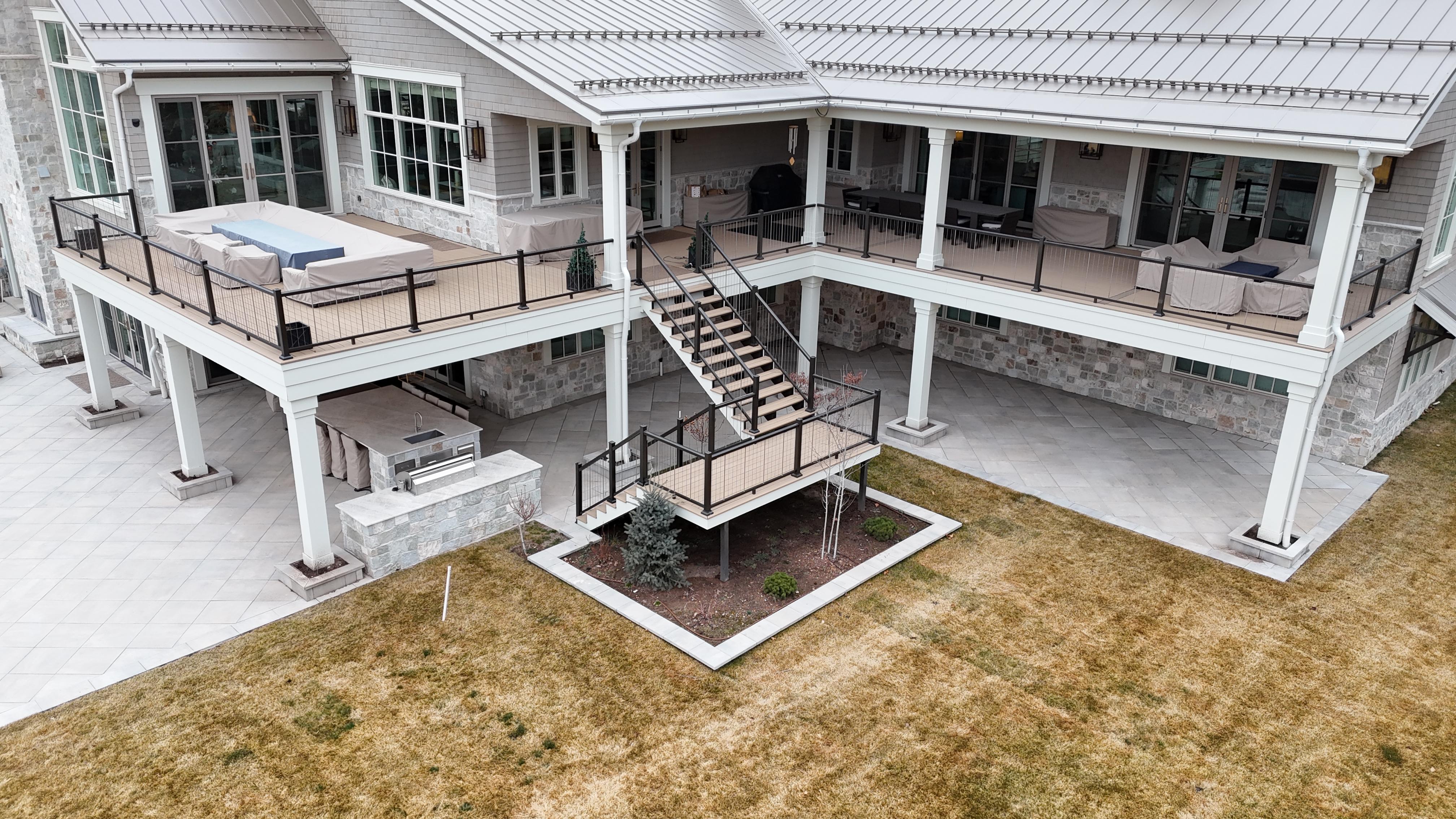
We Didn’t Mean to Build a Better Deck Drainage System—We Just Got Tired of Fixing the Old Problems
We Didn’t Mean to Build a Better Deck Drainage System—We Just Got Tired of Fixing the Old One
There’s a moment on certain jobs where you just stand there and think:
“There has to be a better way than this.”
For us, that moment didn’t happen once. It happened over and over again.We had been installing deck drainage systems for years.
Not casually—a lot of them.
Different homes. Different conditions. Different crews.
And like most contractors, we weren’t trying to reinvent anything. We were using what the industry trusted. We followed the install instructions. We did the water tests. We checked all the boxes.
At first, everything looked great.
You’d frame the deck, install the system, run water through it… and it worked exactly how it was supposed to.
Clean. Simple. Done.
Until the next phase started.
Where Things Started to Break Down. The problems didn’t show up during install.
They showed up after. You’d start laying decking, and somewhere along the way, a screw would miss just enough to matter.
Not a big miss.
Just enough.
And that’s all it took.
Now you’ve got a leak.
So you pull boards back up.
Re-tape. Re-seal. Patch it.
Move forward.
Then a few months later, you get the call.
“Hey, we’ve got water coming through the ceiling.”
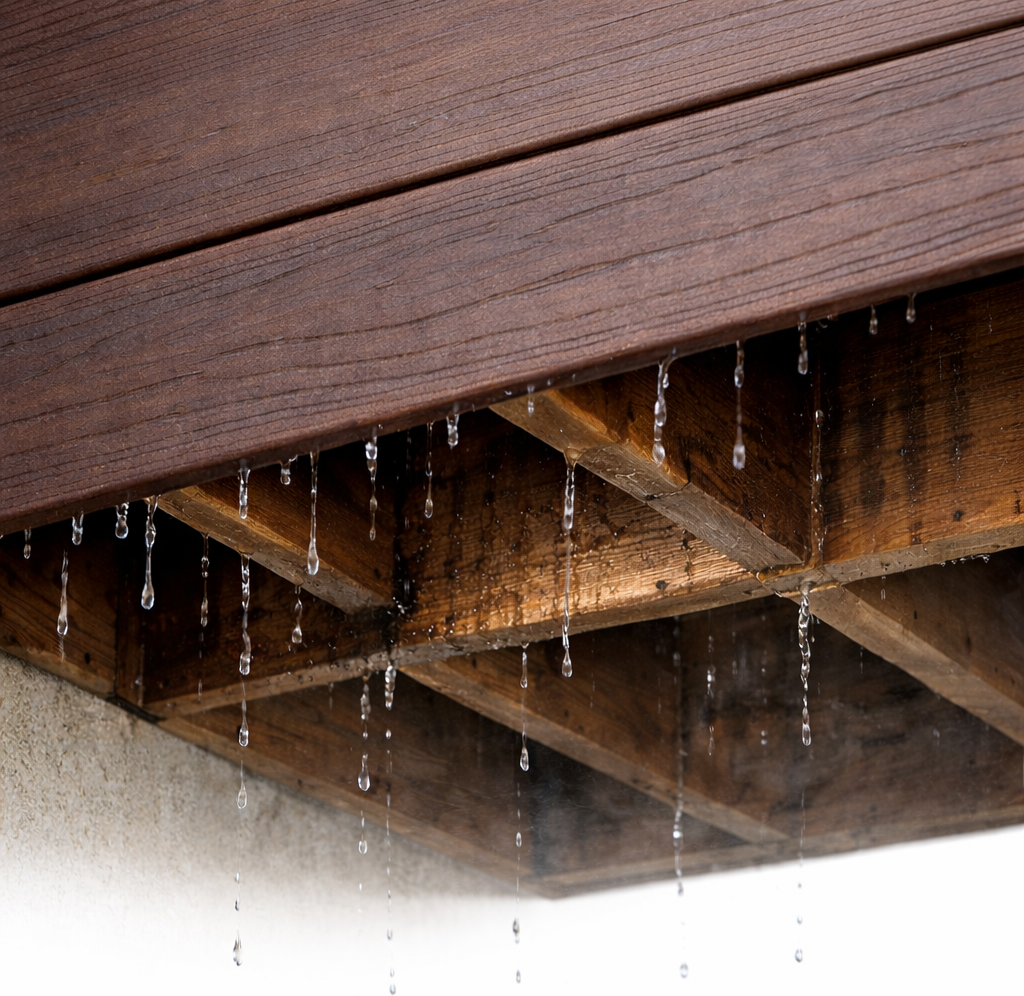
And now you’re back. Only this time it’s worse.
Because the deck has settled. It’s moved. The seasons have changed. What was tight before isn’t tight anymore. If there’s soffit underneath?
Now you’re not just fixing a system.
You’re tearing into a finished space.
We had jobs where we went back multiple times.
Not because we didn’t care.
Not because we didn’t install it right.
But because the system itself didn’t leave much room for real-world conditions.
The Part That Didn’t Sit Right
After enough of those callbacks, a pattern became obvious. It wasn’t the idea behind the system that was the problem.
Water was moving where it was supposed to.
The issue was everything else.
The thin plastics
The seams
The tape
The penetrations
The movement
Everything that had to stay sealed… eventually didn’t.
And once that seal was compromised, you were chasing problems instead of preventing them.
The Job That Changed Everything
There was one project in particular. We had already been out there multiple times trying to fix leaks. At that point, we weren’t just frustrated—we were done doing the same thing expecting a different result.
We had seen a few guys experimenting with rubber membranes. Nothing mainstream. Just builders trying to solve the same problem in their own way.
So we decided to try it.
We went and got a roll of EPDM rubber.
Cut it. Shaped it. Installed it differently.
No big announcement. Just testing something new.
We ran water through it.
Nothing.
No leaks. No weak points. No callbacks.
And more importantly… no stress about whether it would hold.
That Was the Moment
That was the shift.
Not because it was perfect.
But because it was forgiving.
You could step on it.
It didn’t tear.
It didn’t get slippery like plastic.
It didn’t rely on everything being absolutely flawless to work.
It just worked.
And it kept working.
From Experiment to System
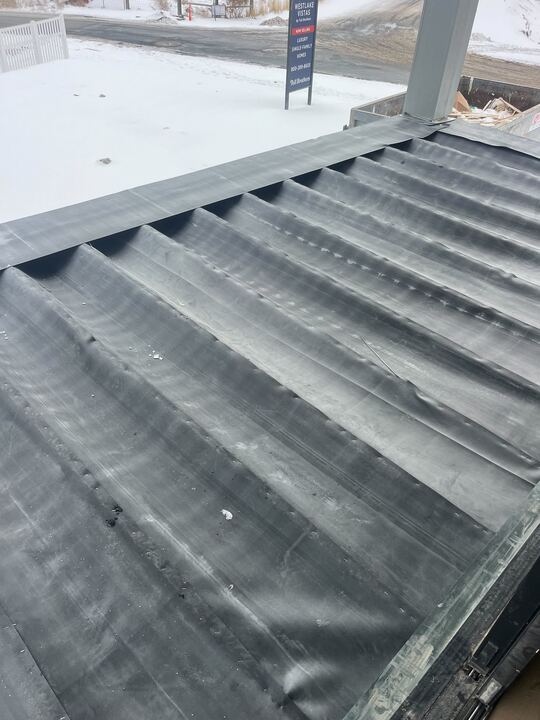
From there, we started refining it.
Not just throwing rubber under a deck—but actually building a system:
Cutting pieces specifically for each project
Eliminating unnecessary seams
Using better sealing materials
Designing it around how decks actually behave
That’s where AquaTech™ came from.
Not from a lab.
Not from a marketing meeting.
From real jobs. Real frustration. Real problem solving.
What We Noticed Immediately
The difference wasn’t subtle.
Install became easier.
Callbacks dropped off.
The system handled movement without falling apart.
And maybe one of the most underrated things—
It felt better to work on.
If you’ve ever walked on a slick plastic system early in the morning with dew on it, you know exactly what I’m talking about.
Rubber doesn’t do that.
It’s stable. It’s predictable.
It behaves the way you want materials to behave when you’re building something that matters.
The Part Most People Don’t Talk About
Here’s the truth:
Most drainage systems aren’t failing because the idea is wrong.
They fail because they don’t account for reality.
Decks move.
People miss screws.
Weather changes things.
A system that only works in perfect conditions… isn’t a reliable system.
Why This Matters
If you’re a contractor, this isn’t about brands.
It’s about:
How many times you have to go back
How much risk you’re carrying
How confident you feel when you walk away from a job
That’s what matters
Where We Landed
Today, AquaTech™ is being used by contractors across the country.
Not because it has the flashiest marketing.
But because it solves a problem most guys have already experienced.
The Bottom Line
We didn’t set out to build a new system.
We just got tired of fixing the old one.
And once we found something that worked better…
There was no going back.
If you’ve had to chase leaks before, you already understand why this matters.
Warrior Built Company is proud to serve homeowners who want a reputable partner from start to finish. With a focus on craftsmanship, professionalism, and lasting quality, we build outdoor spaces that are designed well, built right, and made to be enjoyed for years to come.
We would love to help you build the deck of your dreams
Contact us at: 385-875-5771
